
Meal Preparation for Home Care That Supports Dignity
- Harmony Care
- Aug 3
- 5 min read
A missed lunch can become more than an empty plate. For an older adult, a person living with a disability, or someone recovering from illness, it can affect energy, medication routines, hydration, mood, and confidence at home. Thoughtful meal preparation for home care gives families practical support while protecting something equally meaningful: the comfort of familiar meals, familiar routines, and personal choice.
For many Maine families, the challenge is not simply knowing what to cook. It is finding the time to shop, prepare food safely, remember dietary needs, and make sure a loved one actually has a meal they can enjoy. The right in-home support can turn that daily pressure into a steady, respectful routine.
Why meals matter in home care
Eating well supports everyday strength, but mealtimes also bring structure and connection. A warm breakfast can help someone begin the day with purpose. A prepared lunch can prevent a long afternoon without food. Sitting down with a familiar soup, sandwich, or baked dish can offer reassurance when health needs have made other parts of life feel uncertain.
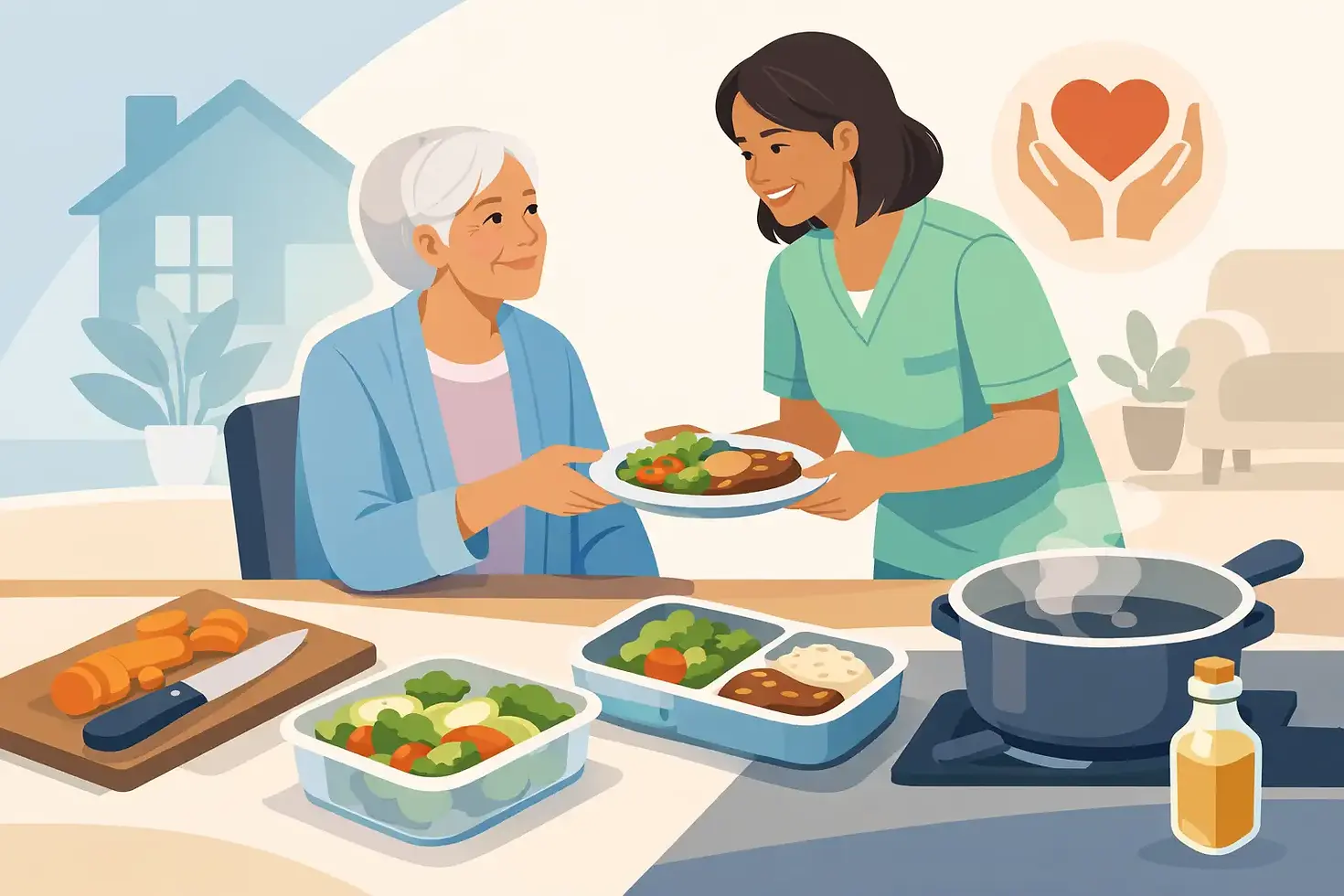
Home care meal support should never feel like taking control away from someone. The goal is to make eating easier while keeping the person involved wherever possible. One client may enjoy choosing recipes and helping wash vegetables. Another may need a caregiver to handle nearly every step. Both deserve to have their preferences heard.
This support can be especially valuable when family caregivers are balancing work, children, appointments, and their own health. Reliable help with meals gives families breathing room without asking their loved one to leave the home they know.
What meal preparation for home care can include
Meal support looks different from household to household. A caregiver may help plan simple meals for the week, make a grocery list, pick up ingredients when that service is arranged, prepare food, portion leftovers, and clean the kitchen afterward. They can also offer companionship during a meal, which may encourage someone who tends to skip eating when alone.
The best plan starts with the person, not a generic menu. Their favorite foods, cultural traditions, appetite, schedule, budget, and ability to chew or swallow all matter. A person who has always eaten oatmeal and fruit in the morning should not suddenly be handed an unfamiliar breakfast just because it seems convenient.
A practical meal routine may include easy options that can be safely reheated, such as vegetable soup, chicken and rice, scrambled eggs, pasta with a protein, or a prepared salad alongside something more substantial. The exact choices depend on dietary guidance and personal taste. Simple food is often the most sustainable food.
Support with special dietary needs
Some people need meals that follow specific guidance for diabetes, heart health, kidney disease, food allergies, or swallowing concerns. In these situations, a caregiver can follow the meal plan provided by the client, family, physician, dietitian, or speech-language professional. Clear written instructions are helpful, especially when different family members or caregivers share responsibilities.
It is wise not to guess when a diet is medically complex. For example, a thickened-liquid plan, a fluid restriction, or a diet that limits sodium or potassium may require precise direction. If appetite changes suddenly, swallowing becomes difficult, or a person is losing weight without explanation, families should speak with the appropriate health professional promptly.
Caregivers can also be an extra set of attentive eyes. Noticing that a loved one is leaving meals untouched, struggling with utensils, or avoiding drinks can help families respond before a small concern becomes a larger one.
Safety belongs in every kitchen routine
A home-cooked meal should feel comforting, not risky. Food safety is one of the quiet but essential parts of dependable in-home care. That means washing hands before preparation, keeping raw foods separate from ready-to-eat foods, using clean surfaces and utensils, and storing leftovers promptly.
Families benefit from agreeing on a few household standards. Label leftovers with the date, keep frequently used foods easy to reach, and remove items that are spoiled or past their safe storage window. If a person has memory loss or reduced vision, caregivers can help reduce hazards by checking that appliances are off and that pathways around the kitchen are clear.
Kitchen support also has physical limits. Standing for long periods, lifting heavy pans, opening containers, and using a stove can be difficult for someone with arthritis, weakness, balance concerns, or fatigue. Preparing ingredients while seated, using lightweight cookware, and keeping daily items at counter height can make participation safer and more comfortable.
Building a routine that people can follow
The most helpful meal plan is rarely the most ambitious one. It is the one a family can maintain on a busy Tuesday, after a medical appointment, or during a Maine winter storm. Begin with the times of day that tend to be hardest. Perhaps breakfast is skipped because getting dressed takes too much energy, or dinner is delayed because no one is available to cook.
From there, create a realistic rhythm. A caregiver might prepare several portions during one visit, leaving clear reheating instructions. Another household may prefer freshly made meals each day because the client enjoys the companionship and smells of cooking. There is no single right approach.
Consider keeping a simple written note in the kitchen with preferred meal times, foods to avoid, allergies, texture needs, hydration reminders, and emergency contacts. This is not about making the home feel clinical. It is about making sure every person providing support has the information needed to offer consistent, respectful care.
It can help to keep four reliable categories of food on hand:
Easy breakfast choices, such as yogurt, eggs, oatmeal, fruit, or toast.
Protein options that fit the person’s diet, including beans, fish, poultry, dairy, or other preferred choices.
Simple sides and snacks, such as cooked vegetables, crackers, applesauce, cheese, or soup.
Drinks the person enjoys and can safely have, along with a plan for regular hydration.
Variety matters, but familiarity matters too. Repeating well-liked meals is often better than filling the refrigerator with food that will go uneaten.
Dignity means choice, not perfection
Families sometimes feel pressure to prepare every meal perfectly. That pressure can lead to burnout, especially when caregiving has already become a full-time responsibility. A balanced approach is more compassionate. Some days may call for a homemade meal; other days, a simple prepared option may be the sensible choice.
Respecting dignity also means avoiding assumptions. Someone may have a smaller appetite but still enjoy eating small portions throughout the day. Another person may refuse a meal because they are in pain, tired, worried, or simply not hungry at that moment. Gentle encouragement is appropriate. Forcing food or treating a capable adult like a child is not.
When possible, offer choices: tea or coffee, soup or a sandwich, peas or carrots. Small decisions can restore a sense of control for someone whose health has required them to depend on others in many ways.
When families need another pair of hands
Loved ones often want to provide all care themselves, and that devotion is deeply meaningful. Yet needing help is not a failure. It can be the step that makes it possible to continue caring at home with more patience, energy, and peace of mind.
A trained, screened caregiver can assist with homemaking tasks, meal preparation, companionship, and the routines that help a household run more smoothly. At Harmony Care, support is built around the individual’s needs and the family’s wishes, with respect for safety, comfort, and the role family members already play. In some situations, a family member or friend may also be able to become a paid caregiver through a Medicaid-supported arrangement, helping make ongoing care more manageable.
Good meal support is not measured by a complicated menu. It is measured by the quiet relief of knowing a loved one has food they enjoy, help when they need it, and the dignity to remain part of the choices that shape their day.


Comments