
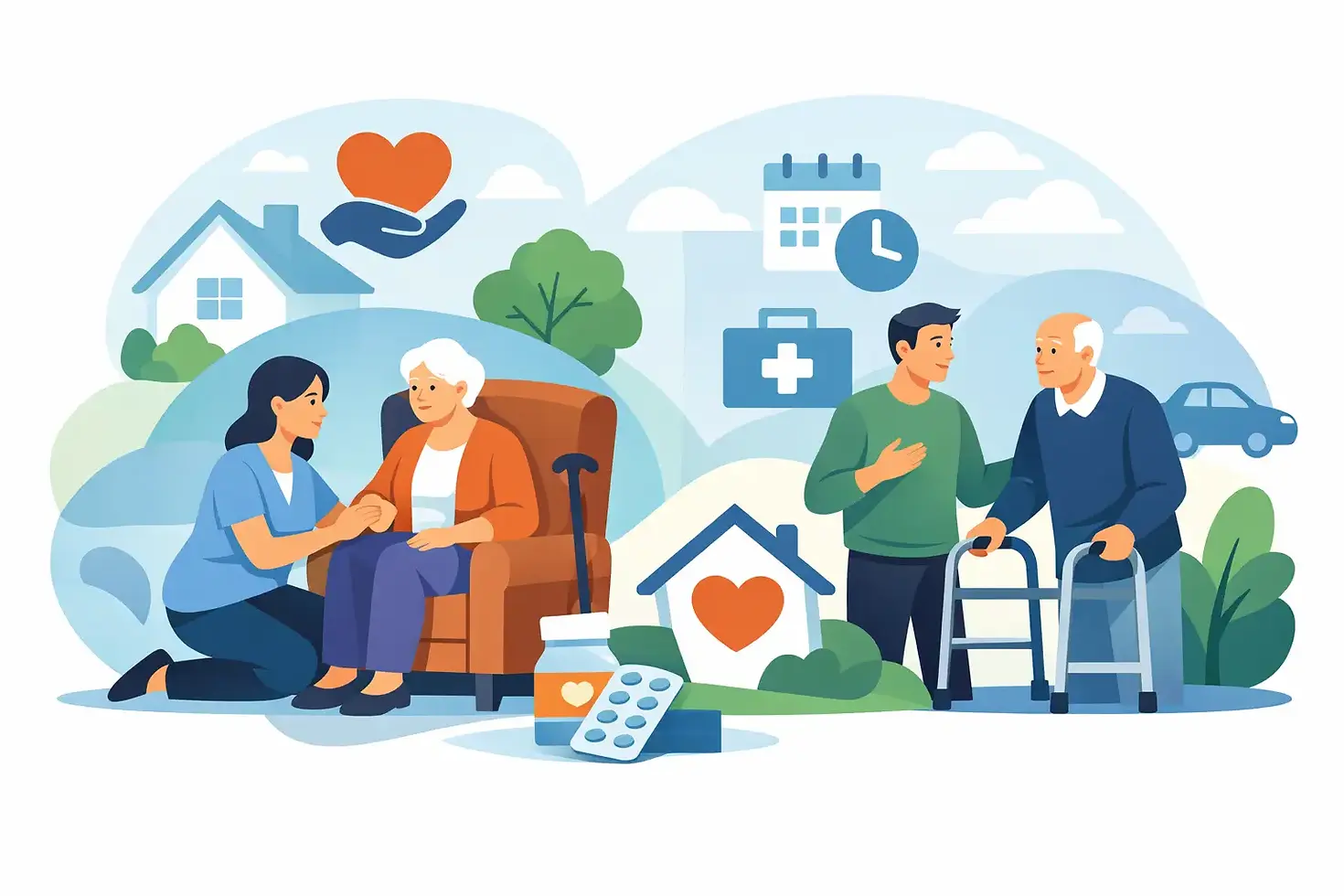
Understanding Home Care Services: A Compassionate Approach
Updated: Jun 1
What Are Home Care Services?
Home care services provide support in a person’s home to assist with daily living, routines, comfort, and overall well-being. The goal is to help individuals remain at home with dignity instead of facing unnecessary placement in a facility.
That support can look different from one household to the next. For one person, it may mean help with bathing, dressing, meals, and medication reminders. For another, it may mean companionship, housekeeping, transportation-related support, or hospice comfort care. Home care is flexible by design because real life is not one-size-fits-all.
In most cases, when families ask this question, they are really asking something deeper: can my loved one stay at home safely, and can we get enough help to make that possible? Home care is often the answer when the need is personal, ongoing, and best handled in a familiar environment.
What Home Care Services Usually Include
The exact services depend on the provider, the client’s condition, and any program coverage involved. Still, most home care falls into a few practical areas.
Personal Care
Personal care helps with hands-on daily needs such as bathing, grooming, dressing, toileting, mobility support, and eating. This kind of assistance matters because small daily tasks can become exhausting or unsafe after illness, injury, aging, or disability.
Companion Care
Companion care focuses on presence, conversation, emotional support, and help staying engaged with everyday life. That may sound simple, but loneliness and isolation can affect appetite, mood, memory, and health. Having a trusted caregiver nearby can make a home feel livable again.
Homemaking and Light Housekeeping
Homemaking and light housekeeping support the household itself. That can include laundry, meal preparation, tidying, changing linens, and keeping living areas safer and easier to manage. For many families, these are the tasks that quietly pile up until the whole situation starts feeling overwhelming.
Medication-Related Support
Medication-related support is another common part of home care. In non-medical settings, this usually means reminders, routine support, and helping a client stay organized with an approved care plan. It does not replace nursing or medical treatment, but it can reduce missed medications and day-to-day confusion.
Hospice Support
Some providers also offer hospice support in the home. This is centered on comfort, dignity, and presence during end-of-life care. Families often need both emotional reassurance and practical help during this time, and home care can offer both.
Who Can Benefit from Home Care Services?
Home care is often associated with seniors, but it serves a much wider group. Older adults who want to age in place are a major part of it, especially when they need help with mobility, routines, or memory-related challenges.
Adults with disabilities may also benefit from consistent in-home support, particularly when they need help with personal care, homemaking, or maintaining independence. People managing chronic conditions often use home care as well, especially when symptoms make daily tasks harder even if they do not need full-time medical care.
It can also help after surgery, after a hospital discharge, or during a period of recovery when someone temporarily needs extra support at home. In those cases, home care may prevent setbacks and ease the transition back to normal routines.
And then there are family caregivers. They may not think of themselves as the ones who need home care services, but they often do. When one daughter, spouse, sibling, or friend is carrying the full weight of care, burnout becomes a real risk. Good home care supports the client, but it also supports the people who love them.
Home Care vs. Home Health Care
This is where many families get confused. Home care and home health care are not always the same thing.
Home care usually refers to non-medical or supportive care provided in the home. It helps with daily living, comfort, supervision, and household routines. Home health care is generally clinical and may involve skilled nursing, therapy, wound care, or other medical services ordered by a doctor.
Some people need both. For example, a person may receive medical visits from a nurse but still need daily help getting dressed, preparing meals, or staying safe throughout the week. One does not automatically replace the other.
That difference matters because families sometimes wait too long, thinking only medical care counts as real help. In reality, many of the biggest risks at home come from missed meals, falls, confusion, isolation, and exhaustion with everyday tasks. Supportive care addresses those risks directly.
Why Families Choose Home Care
Most families are not looking for perfect conditions. They are looking for a way to keep life manageable without sacrificing safety or dignity.
Home care allows a loved one to stay in familiar surroundings, near their routines, belongings, pets, and memories. That familiarity can be deeply reassuring, especially for seniors or individuals who become distressed by major changes. It may also help preserve confidence and independence because the person is receiving support in their own space rather than adapting to an institution’s schedule.
There are trade-offs, of course. Home care is not the right fit for every situation. If someone needs constant medical monitoring or has needs that cannot be safely handled at home, a higher level of care may be necessary. But for many people, home care offers the right middle ground - enough help to stay safe, with enough freedom to still feel like themselves.
Families also choose home care because it can be personalized. Some people need only a few hours of support each week. Others need daily care or a broader plan that includes companionship, homemaking, and routine assistance. The best care plans adapt as needs change.
What to Look for in a Home Care Provider
Trust matters as much as services do. Inviting someone into the home is personal, and families should expect both compassion and professionalism.
A dependable provider should be clear about caregiver screening, background checks, training, and supervision. Families should also ask whether caregivers are bonded, insured, and CPR certified when appropriate. Those details are not just paperwork. They help protect vulnerable clients and give families confidence that care is being delivered responsibly.
It also helps to ask how quickly care can begin, how schedules are handled, and what happens if a regular caregiver is unavailable. A warm promise means more when it is backed by structure, communication, and follow-through.
For some households, another important question is whether a family member can become the paid caregiver. In certain Medicaid-supported arrangements, that may be possible. This can be life-changing for families already providing care without pay, because it formalizes the role and offers financial support while keeping care in trusted hands. Harmony Care is one provider that helps families navigate that kind of arrangement while also handling training, compliance, and fast placement.
When to Start Home Care Services
Families often wait until there is a crisis, but the earlier signs are usually there. A loved one may be skipping showers, forgetting medications, losing weight, falling behind on housekeeping, or becoming withdrawn. A family caregiver may be missing work, losing sleep, or feeling constantly worried.
None of those signs mean failure. They mean support is needed.
Starting home care earlier can make a big difference. It gives everyone time to build trust, settle into routines, and prevent avoidable problems. It can also preserve family relationships, because relatives are no longer forced to carry every task alone.
There is no single moment that makes the decision obvious for everyone. Sometimes the need is immediate. Sometimes it grows gradually. What matters is recognizing that asking for help can be a caring decision, not a last resort.
Home care works best when it protects more than physical safety. It should also protect dignity, comfort, and peace of mind. For many families, that is what makes staying at home feel possible again.
If you are asking what is home care services, you may already be closer to the answer than you think. It is the kind of support that meets people where they are, honors the life they have built at home, and reminds families that they do not have to carry everything alone.
Conclusion: Embracing Home Care Services
In conclusion, home care services are a vital resource for many families. They provide the necessary support to ensure that loved ones can remain in the comfort of their own homes. This approach not only enhances safety but also fosters dignity and joy in everyday life.
If you are considering home care, remember that it is about finding the right fit for your loved one’s needs. Embrace the journey, and know that help is available. You are not alone in this.
---wix---


Comments