
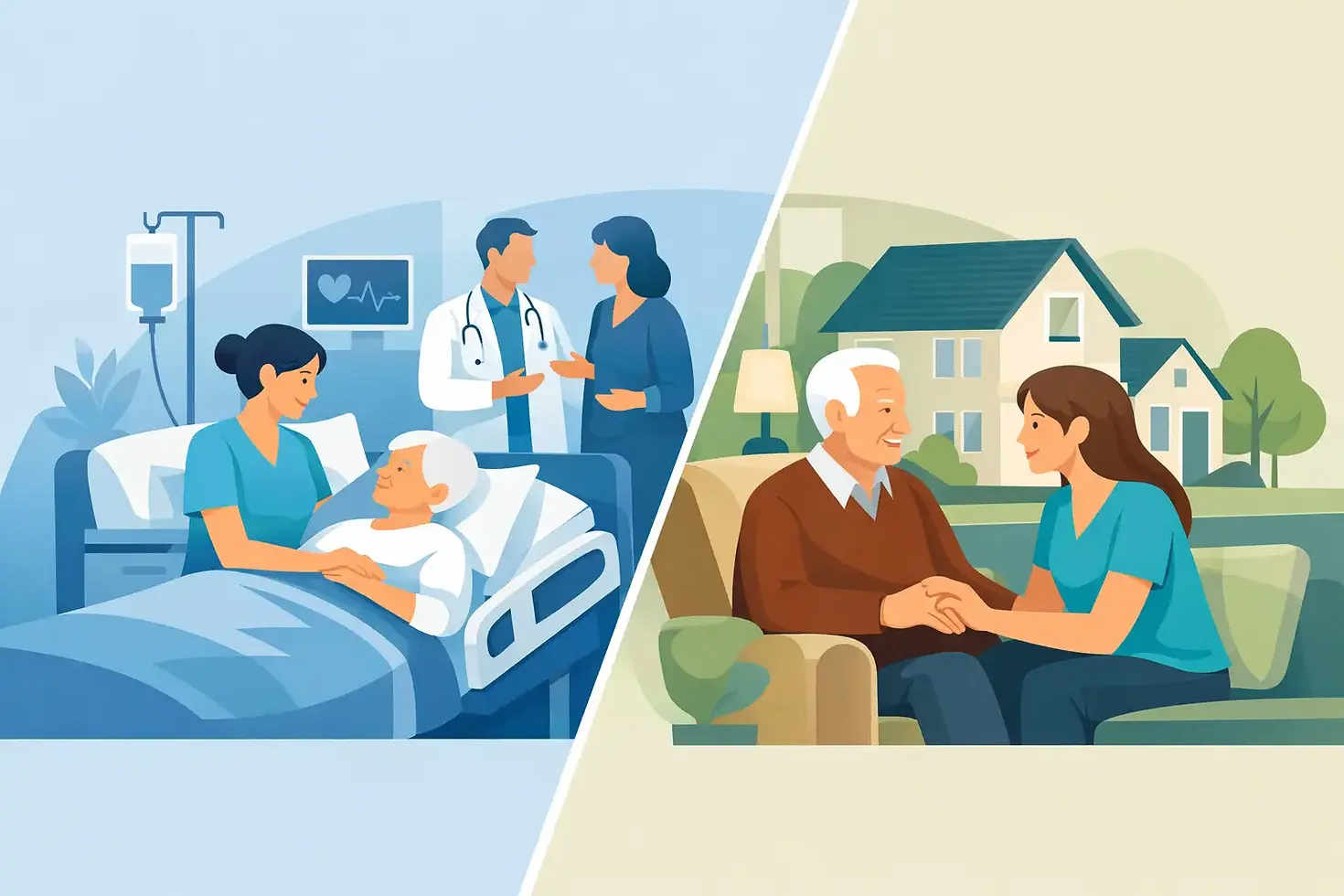
Hospice Care vs Home Care Explained
- Harmony Care
- Jul 8
- 6 min read
When a loved one needs more support at home, families are often asked a hard question before they are ready to answer it: do you need home care, hospice care, or both? Understanding hospice care vs home care can ease some of that pressure and help you choose support that protects comfort, dignity, and peace of mind.
The confusion is understandable. Both services can happen at home. Both are built around safety and quality of life. Both can bring relief to families who are stretched thin. But they are not the same, and the difference matters because the right care at the right time can make everyday life feel more manageable.
Hospice care vs home care: what is the difference?
Home care is usually ongoing support for daily living. It helps a person stay safely at home when age, disability, illness, or recovery makes everyday tasks harder. That can include help with bathing, dressing, meals, light housekeeping, reminders, companionship, mobility support, and other routines that keep a household and a person stable.
Hospice care is specialized end-of-life care for someone with a terminal illness, generally when treatment is no longer focused on cure and the priority becomes comfort. Hospice is centered on pain management, symptom relief, emotional support, and helping the person live with as much comfort and dignity as possible.
In simple terms, home care supports day-to-day living. Hospice supports comfort during the final stage of life. Sometimes families need one or the other. In many cases, they need both working together.
What home care is designed to do
Home care is often the better fit when a person still wants to remain at home but needs consistent help to do so safely. This may be a senior who is becoming unsteady, an adult with a disability who needs assistance with routines, or someone with a chronic condition who benefits from dependable support.
The goal is not to replace independence. It is to preserve it for as long as possible. A good caregiver steps in where help is needed while still respecting the person’s preferences, habits, and sense of control.
For many families, this is also where emotional relief begins. When one daughter is trying to handle meals, medication reminders, laundry, transportation, and her own full-time job, the strain builds quickly. Home care creates breathing room. It allows care to be shared instead of carried by one exhausted person.
This support can be flexible. Some people need a few hours a week. Others need daily assistance. In some cases, a family member or friend may even become the paid caregiver, which can help keep care personal while also easing financial stress.
What hospice care is designed to do
Hospice care serves a different purpose. It is meant for people who are nearing the end of life and need care that focuses on comfort rather than cure. That does not mean giving up on the person. It means changing the goal of care.
Instead of asking, “How do we keep treating this disease aggressively?” the question becomes, “How do we keep this person comfortable, supported, and respected?” That shift can be deeply emotional for families, but it can also be a relief. It often opens the door to more honest conversations, better symptom control, and a more peaceful care experience.
Hospice teams typically address pain, breathing issues, anxiety, restlessness, and other symptoms that can become more difficult in the final stage of illness. They also support the family emotionally and help everyone understand what to expect.
One common misunderstanding is that hospice means care stops. It does not. Care continues, but with a different focus. The person still deserves attention, tenderness, and expert support. In many ways, hospice is about making sure no one goes through this season alone.
Can hospice and home care happen at the same time?
Yes, and this is where many families find the best balance.
Hospice services often do not cover every hour of hands-on help a person may need at home. A hospice team may visit regularly and manage comfort-related care, but family members are still often the ones present through the day and night. That can become overwhelming, especially when someone needs help with toileting, repositioning, meal preparation, bathing, or simply having a calm, trusted person nearby.
That is where home care can support hospice. While hospice addresses end-of-life comfort and symptom management, home care can help with the daily personal support that makes staying at home more realistic. Together, they can create a fuller circle of care.
For example, a person receiving hospice may still need help getting cleaned up in the morning, changing linens, light housekeeping, or companionship while family members rest. Those needs are real, and meeting them can make the home environment feel more peaceful for everyone involved.
Hospice care vs home care: how to know which one fits
The right choice depends on the person’s condition, goals, and daily needs.
If your loved one is living with a long-term condition, needs help with routines, or is struggling to manage safely at home, home care may be the natural starting point. This is especially true when the focus is still on maintaining function, supporting independence, and reducing caregiver burnout.
If your loved one has a terminal diagnosis and the conversation has shifted toward comfort, symptom relief, and quality of life in the time that remains, hospice may be appropriate. Usually, that decision is guided by the medical team.
Sometimes the clearest sign is not the diagnosis alone, but what daily life now looks like. Are simple tasks becoming too hard? Is the family overwhelmed? Is pain or discomfort increasing? Is the person spending more time in bed, eating less, or needing more hands-on support? These changes can point to the need for more specialized help.
There is also an in-between space where families are unsure. That is normal. You do not need to have every answer before asking questions. In fact, asking early often prevents crisis decisions later.
The family role in both types of care
Whether a family chooses home care, hospice, or both, loved ones remain a central part of the care experience. That is often beautiful, but it can also be draining.
Many people in Maine are already caregiving long before they use that word for themselves. They are managing appointments, preparing meals, checking medications, cleaning up, and sitting up at night when something feels off. Over time, this can lead to burnout, guilt, and financial pressure, especially when caregiving affects work hours or income.
That is one reason structured in-home support matters so much. Families need compassion, but they also need practical help they can count on. Screened caregivers, reliable scheduling, training, and fast setup are not small details. They are part of what helps a family feel safe.
In some situations, having a family member become a paid caregiver can be especially meaningful. It allows care to stay in the hands of someone familiar and trusted, while bringing more stability and support to the household. When that arrangement is available, it can protect both dignity for the person receiving care and sustainability for the person providing it.
Choosing care with confidence
No family wants to feel like they are making the wrong call at the wrong time. The truth is that care decisions are rarely perfect or final. Needs change. Health changes. What worked three months ago may not be enough today.
The best next step is usually the simplest one: look honestly at what your loved one needs right now, not what you wish were still true. If the main need is help with everyday living, home care may be the right support. If the focus has shifted to end-of-life comfort, hospice may be the right path. If both medical comfort and daily hands-on support are needed, the two can work side by side.
At Harmony Care, families often come to this decision in the middle of stress, fatigue, and uncertainty. What helps most is having support that is both compassionate and structured, so care feels personal without feeling chaotic.
The right care should make home feel safer, calmer, and more dignified. If you are weighing hospice care vs home care, start with the question that matters most: what would bring the most comfort and support to your loved one today?


Comments